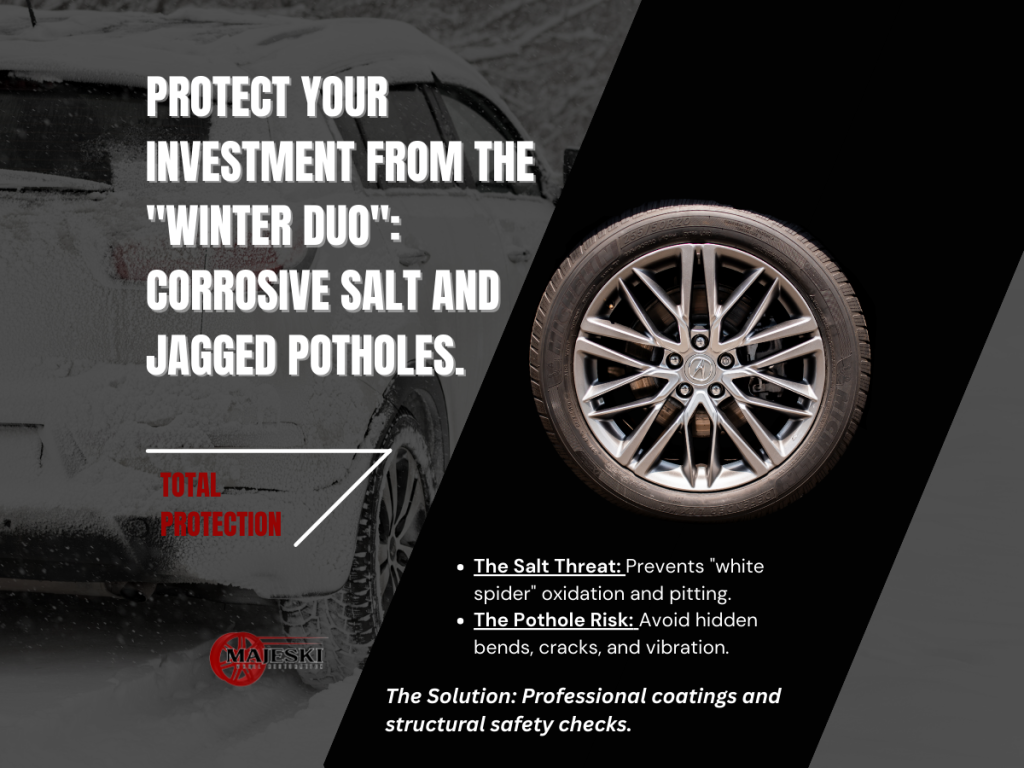
Are your luxury wheels ready for the winter elements? In this post, we’ll break down how to prep your rims for freezing temperatures, how to identify hidden pothole damage, and how to protect your investment from corrosive road salts.
Winter weather in Virginia and Maryland presents a unique set of challenges for vehicle owners. Between the freezing-thawing cycles that create massive potholes and the aggressive chemical brines used to clear the roads, your wheels are under constant attack.
At Majeski Wheel Restoration, our technicians see a significant spike in wheel damage during the winter months. To help you avoid costly replacements, we’ve put together this expert guide on seasonal wheel care and damage diagnosis.
Winterization Checklist: Preparing Your Wheels for the Cold
Prevention is the most effective tool in your maintenance kit. Before the first major snow hits Richmond or Virginia Beach, follow these steps to shield your alloy wheels from the elements.
1. Deep Clean and Decontaminate
Standard car washes often leave behind microscopic brake dust particles. When mixed with road salt, these particles create a galvanic reaction that can lead to rapid pitting. Use a pH-neutral wheel cleaner to strip away contaminants before the winter season begins.
2. Apply a Protective Barrier
Apply a high-quality wheel sealant or ceramic coating. This creates a hydrophobic layer that prevents salt and brine from bonding directly to the clear coat. Think of it as a “winter coat” for your rims.
3. Check Tire Pressure Regularly
For every 10-degree drop in temperature, your tires can lose approximately 1 PSI. Under-inflated tires provide less cushioning for your rims, making them significantly more susceptible to cracks when hitting a pothole.
4. Inspect for Pre-existing Damage
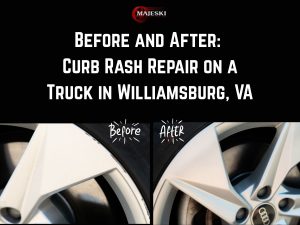
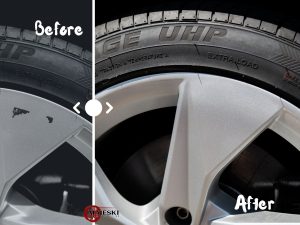
Small nicks or existing wheel curb rash repair needs should be addressed immediately. These small openings in the clear coat allow salt to get underneath the finish, leading to “white spidering” or oxidation.
Pothole Damage Diagnosis: Spotting the Invisible
In areas like Alexandria, VA, winter means potholes. While some damage is obvious, structural issues are often “invisible” to the untrained eye. Here is how our certified technicians differentiate between cosmetic and functional damage.
The Visual Inspection (Cosmetic Scrapes)
If you hit a pothole or slide into a curb, look for:
- Curb Rash: Scratches along the outer lip of the rim.
- Finish Peeling: Clear coat flaking off due to the impact.
- Gouges: Deeper metal loss that requires professional wheel scratch removal.
The “Invisible” Diagnosis (Structural Damage)
Sometimes a wheel looks perfect from the outside but is dangerously compromised. Watch for these red flags:
- Vibration in the Steering Wheel: If you feel a rhythmic shaking at highway speeds after hitting a bump, you likely have a “bent” rim.
- Slow Air Leaks: If your tire pressure light keeps coming on, the impact may have broken the “bead” (the seal between the tire and the rim) or caused a hairline crack in the inner barrel.
- Bulges in the Tire Sidewall: This often indicates that the internal structure of the tire was pinched against the rim.
Expert Tip: According to NHTSA guidelines, maintaining proper tire inflation is the #1 way to prevent wheel-related failures. A properly inflated tire acts as a shock absorber for your expensive alloy rims.
“Do This, Not That”: Winter Wheel Care
| Do This | Avoid That |
| Do wash your wheels weekly during winter to remove salt buildup. | Don’t use stiff-bristle brushes that can create micro-scratches for salt to hide in. |
| Do use a dedicated wheel sealant. | Don’t use “acidic” wheel cleaners, as they can weaken the clear coat over time. |
| Do consult a pro for rim repair types if you feel a vibration. | Don’t ignore a “minor” vibration; it can lead to premature suspension wear. |
Frequently Asked Questions
Does road salt actually eat through metal?
Technically, salt accelerates the oxidation of aluminum. While aluminum doesn’t “rust” like steel, it undergoes “pitting corrosion,” which creates small holes and weakens the structural integrity of the wheel.
Can a bent rim be fixed onsite?
While we specialize in wheel repair Richmond and surrounding areas for cosmetic restoration, some severe structural bends require specialized shop machinery. However, most curb rash and finish damage from winter sliding can be handled by our mobile units.
Protecting Your Investment
Winter doesn’t have to mean the end of your luxury wheels’ flawless finish. By following a strict cleaning regimen and knowing how to spot the early signs of pothole damage, you can save thousands in replacement costs.
If you’ve recently encountered a Virginia pothole or noticed salt damage on your rims, don’t wait for the spring thaw to fix it.