Not every wheel restoration job involves dramatic gouges or deep curb rash. Some of the most valuable work we do involves wheels that look fine at a glance but reveal real surface damage the moment light hits them at the right angle. This Chevrolet came to us in Waldorf, Maryland with exactly that kind of damage — factory silver alloy wheels with light but visible scratching across the spoke faces that had gone unaddressed long enough to dull the overall finish. This case study walks through the full wheel restoration process from assessment to final result.
The Vehicle and the Damage
The vehicle was a Chevrolet SUV brought to our attention by a Waldorf-area client who had noticed the finish on two of their wheels looked increasingly dull despite regular washing. The wheels were factory silver aluminum alloy, approximately 17 to 18 inches in diameter, featuring a twin five-spoke design with a machined and painted silver finish standard on mid-trim Chevrolet models from this generation.
Factory wheels on vehicles like this use a painted aluminum finish over a machined base, then sealed with a clear coat layer. It is a durable finish under normal conditions, but it is not impervious to contact damage. Once the clear coat is compromised, the paint layer beneath becomes vulnerable to moisture, road salt, and brake dust — all of which are particularly aggressive on Maryland roads during winter and spring months.
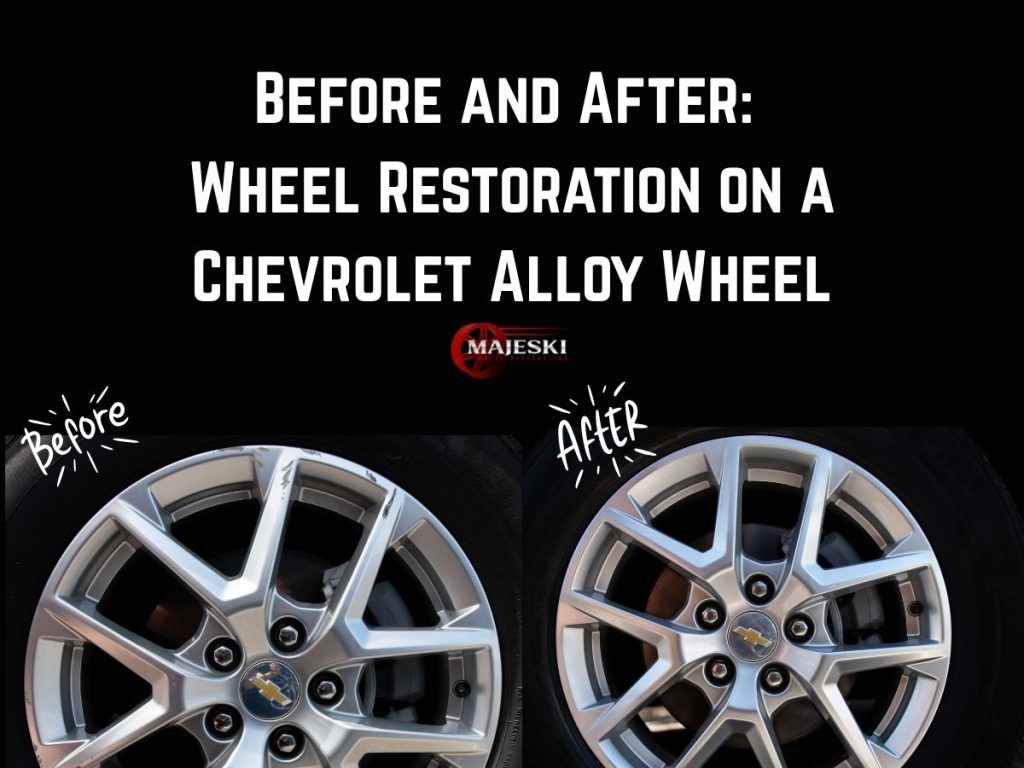
On this set of wheels, the upper spoke faces showed light but consistent surface scratching. The marks were concentrated in areas consistent with car wash brush contact, which is one of the most underreported causes of alloy wheel finish damage. Automated car washes use bristle or cloth materials that seem gentle but carry enough grit over repeated cycles to wear through clear coat on aluminum wheels over time.
The damage was not structural. The wheels were sound. But the finish had been compromised across multiple spokes, and left untreated, the exposed areas would have continued to degrade — particularly given the road salt exposure common to the Waldorf and greater Charles County area through the winter months.
Why Factory Silver Finishes Require Careful Restoration
Chevrolet factory wheel finishes are not a single uniform silver. Depending on the trim level and model year, the finish may be a painted silver, a machined silver with a painted accent, or a full hyper silver with a specific metallic content. Getting the color match wrong on a restoration produces a result that looks patched rather than restored.
This is the most common failure point in DIY wheel touch-up kits. Generic silver aerosol products do not account for the undertone, metallic density, or sheen level of a specific OEM finish. The result is a visible mismatch that draws more attention to the repair than the original damage did.
Professional restoration uses color-matched materials referenced against the vehicle's specific finish. On this Chevrolet, that meant matching the exact tone and reflectivity of the factory silver before any product touched the wheel.
The Restoration Process Step by Step
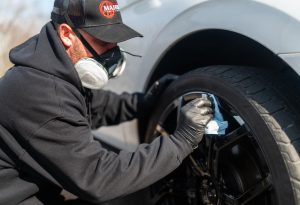
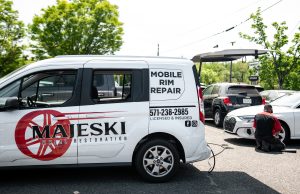
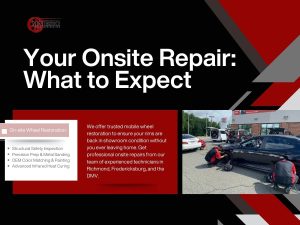
The job followed the same disciplined process we apply to every wheel regardless of damage severity. Our technician arrived at the client's location in Waldorf fully equipped and completed the repair on-site without requiring the vehicle to be dropped off at a shop.
Surface decontamination. Both wheels were cleaned and decontaminated using a professional iron remover to neutralize embedded brake dust particles. Brake dust contains ferrous material that bonds to aluminum wheel finishes at a microscopic level. Standard washing does not remove it. Leaving it in place and refinishing over it causes adhesion failure within months.
Clear coat assessment and preparation. The scratched spoke faces were assessed for clear coat integrity. Where the clear coat had been worn through, the surrounding edges were carefully feathered to create a smooth transition zone for the repair. This step determines whether the final finish reads as a seamless restoration or a visible patch.
Color match and application. The factory silver finish was matched and applied in controlled passes. Each coat was allowed to flash properly before the next was applied. Rushing this stage is the other common reason refinishing jobs fail — trapped solvents under an overcoat cause the finish to bubble or peel within weeks of the repair.
Clear coat and cure. A protective clear coat was applied over the restored areas and allowed to cure fully. The wheels were not returned to service until the finish had reached full hardness, ensuring the repair would hold up to normal driving conditions from day one.
The Result
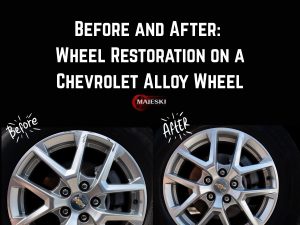
The restored wheels showed a uniform silver finish across all spoke faces with no visible transition between the repaired and untouched areas. Under direct light and at all viewing angles, the finish read as consistent and factory-quality.
More importantly, the clear coat barrier was restored across the previously compromised areas. The wheels are now protected against the moisture, road salt, and brake dust exposure that would have continued degrading the finish had the damage been left in place.
This is the practical value of professional wheel scratch removal that goes beyond appearance. A restored finish is a sealed finish. Sealing the surface stops the degradation cycle before it reaches a point where more extensive repair is needed.
What This Job Cost vs. What Replacement Would Have Cost
Factory replacement alloy wheels for a Chevrolet SUV of this generation carry a significant cost through OEM channels, and that does not account for installation or balancing. Sourcing a single matching wheel from a secondary market adds the complication of finding the correct finish variant, which on Chevrolet models can vary between model years even within the same body style.
The full restoration on both affected wheels came in well below the cost of a single OEM replacement. The client kept their original factory wheels, maintained finish consistency across the full set, and avoided the sourcing headache that comes with trying to match a specific factory variant through the aftermarket.
For Waldorf-area drivers and vehicle owners across Charles County and Southern Maryland, restoration is almost always the more practical and cost-effective path when the damage is surface-level and caught before corrosion sets in.
Frequently Asked Questions
Can light scratches on factory alloy wheels really be fully restored?
Yes. Surface scratches that have not reached the base aluminum can be leveled, color-matched, and clear-coated to a finish that is seamless under normal viewing conditions. The key is proper surface preparation and accurate color matching, both of which require professional materials and technique.
Does automated car wash damage alloy wheels?
Over time, yes. Brush-style and some soft-cloth automated car washes carry accumulated grit that wears through clear coat on aluminum wheels across repeated cycles. Touchless washing is the safer option for maintaining factory alloy finishes long term.
How do I know if my wheel scratches need professional repair or just a polish?
If the silver base material is visible beneath the paint, the clear coat has been broken and professional repair is the right call. Surface-level marks that have not removed any finish can sometimes be addressed with a machine polish. When in doubt, a professional assessment takes minutes and costs nothing.
Will restored wheels look different from the untouched wheels on the same vehicle?
Not with a professional color-matched restoration. A properly matched and applied finish is indistinguishable from the factory surface under normal lighting. The goal of every restoration we complete is that the repair is invisible.
How long does a wheel scratch restoration take?
Most single or double-wheel scratch repairs are completed within a half day on-site. Wheels are ready to drive within 24 hours once the finish has fully cured.
Mobile Wheel Repair in Waldorf, MD
Surface damage on alloy wheels is almost always repairable, and the sooner it is addressed, the simpler and less expensive the job becomes. Whether your wheels show light scratching, curb rash, or finish wear, a professional assessment gives you a clear picture of what the repair involves and what it will cost.
Majeski Wheel Restoration serves Waldorf, La Plata, White Plains, and communities throughout Charles County and Southern Maryland. We come to your location, assess the damage in person, and complete most repairs the same day — no shop drop-off, no downtime.