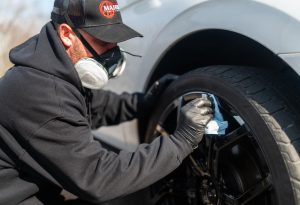
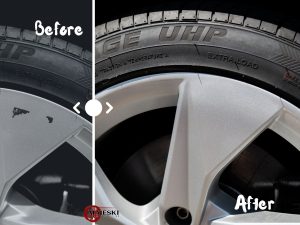
When a client brought in their Audi A6 with visibly scratched alloy wheels, the damage told a familiar story. A tight garage, a concrete pillar, and one moment of misjudgment had left two wheels with deep silver gouges cutting through the factory finish. This is one of the most common calls we receive, and it is also one of the most satisfying jobs to complete. This is a full walkthrough of the alloy wheel scratch removal process, before and after, so you know exactly what professional restoration looks like from start to finish.
What the Damage Actually Looked Like
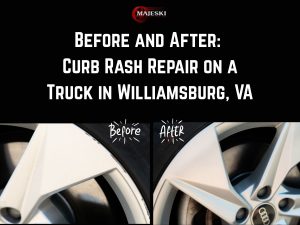
The Audi came in with scratches on the front driver and passenger-side wheels. Both showed the same pattern: jagged gouges along the outer face of the spoke, with the factory silver finish completely removed down to bare metal in places.
This type of damage is more than cosmetic. Bare metal on an alloy wheel is vulnerable to oxidation. Without a protective finish, moisture and brake dust begin attacking the exposed surface almost immediately. Left untreated for several months, those scratches would have developed into corrosion that is significantly harder and more expensive to address.
The client had already noticed the wheels were beginning to look dull around the damaged areas, a sign that surface degradation had started. Acting at this stage was the right call.
Step One: Assessment and Surface Preparation
Before any restoration work begins, a thorough assessment determines the depth of the damage and the condition of the surrounding finish. Shallow scratches that have not broken through the clear coat require a different approach than deep gouges that have reached bare metal.
On this Audi, both affected wheels had damage that reached the base material. That meant the repair process needed to include filling, leveling, and refinishing, not just a surface polish.
The wheels were cleaned and decontaminated first. Any brake dust, road grime, or surface oxidation needs to be fully removed before work begins. Skipping this step leads to adhesion failures that show up weeks later, which is one of the most common reasons DIY touch-up jobs fail.
Step Two: Scratch Repair and Surface Leveling
Deep scratches require a fill and level process before refinishing. The goal is to restore the wheel's surface to a uniform, smooth profile that matches the undamaged areas.
On both wheels, the gouged areas were carefully filled and leveled using professional-grade materials. Each pass was checked against the surrounding surface to ensure a flush result. This stage takes patience. Rushing it produces a repair that looks fine in the shop but telegraphs through the final finish under direct light.
Once the surface was level, fine sanding stages brought the repaired area to the correct texture for primer and paint adhesion.
Step Three: Color Matching and Refinishing
Color matching is where amateur repairs fall apart. Audi's factory wheel finishes are not a generic silver. They have a specific tone, metallic content, and clear coat sheen that varies by model year and trim level.
We color-matched the finish to the existing wheels on this vehicle. The repaired sections received primer, a matched base coat, and a clear coat layer applied in controlled conditions on-site.
The result was a seamless finish across both wheels. Under direct light, standing at any angle, the repaired areas were indistinguishable from the untouched sections of the wheel.
The Before and After: What Changed
| Detail | Before | After |
|---|---|---|
| Wheel finish | Gouged, bare metal exposed | Fully restored, color-matched |
| Corrosion risk | High, oxidation beginning | Eliminated, surface sealed |
| Appearance | Visibly damaged, dull patches | Factory-quality finish restored |
| Wheels affected | 2 wheels | Both fully restored |
| Total service time | N/A | Completed same day, on-site |
What This Repair Cost vs. What Replacement Would Have Cost
OEM Audi alloy wheels are not cheap. Depending on the model and trim, a single factory replacement wheel for an A6 runs between $400 and $900, and that is before shipping or installation.
The professional restoration on both wheels came in well under the cost of a single replacement wheel. The client kept their original factory wheels, avoided the hassle of sourcing a matching replacement, and left with a result that looked identical to new.
For luxury and performance vehicles in particular, restoration is almost always the more financially sound decision when the damage is caught before it reaches a structural level.
You can learn more about our full alloy wheel scratch removal service and what the process looks like for different types of damage.
Frequently Asked Questions About Alloy Wheel Scratch Removal
Can deep scratches on alloy wheels really be fully repaired?
Yes. Deep scratches that have reached bare metal can be filled, leveled, color-matched, and refinished to a factory-quality result. The key is acting before corrosion sets in, which complicates the repair and increases cost.
How do I know if my wheel scratches are deep enough to need professional repair?
If the silver or bare metal is visible beneath the paint, the scratch has broken through the protective finish and professional repair is the right move. Surface-level marks that have not removed any finish can sometimes be addressed with a light polish. When in doubt, a professional assessment is free and takes minutes. Visit our wheel repair FAQ for more guidance.
Will the color match perfectly after repair?
A professional technician color-matches the finish to your existing wheels using the correct base coat, metallic content, and clear coat. The result should be seamless and indistinguishable under normal viewing conditions.
How long does alloy wheel scratch removal take?
Most single or double-wheel scratch repairs are completed within a half day on-site. The wheels are ready to drive within 24 hours once the finish has fully cured.
Does scratched wheel finish void my warranty?
Wheel finish damage is typically considered wear and tear and does not affect vehicle warranties. However, if you have a separate wheel or tire protection plan, review its terms before proceeding with any repair provider.
Book Your Alloy Wheel Scratch Removal
Scratched alloy wheels are one of the most repairable forms of wheel damage, and the sooner they are addressed, the better the outcome. Whether it is one wheel or a full set, Majeski Wheel Restoration brings shop-quality results directly to your location.
Check our service locations to see if we cover your area, and get in touch for a free quote today.