Think those dark stains on your rims are just road grime? In this post, we’ll explain the hidden chemistry of brake dust, how it eats through your wheel’s protective finish, and the steps you must take to prevent permanent pitting.
To the average vehicle owner, the gray-black film that coats luxury wheels after a week of driving looks like harmless dirt. However, as a professional technician, I can tell you that “dirt” is the least of your worries.
At Majeski Wheel Restoration, we frequently see high-end wheels in Richmond and Williamsburg that require total refinishing simply because brake dust was allowed to sit for too long. Understanding the science behind this “dust” is the first step in protecting your investment.
Chemical Composition: Why Brake Dust is “Liquid Sandpaper”
Brake dust isn’t just one substance; it is a volatile cocktail of materials sheared off your brake rotors and pads under extreme heat and pressure.
1. Metallic Shavings (The Core Threat)
Brake rotors are typically made of cast iron or steel. When you apply the brakes, microscopic, red-hot iron particles are ground off. These shards are jagged and “ferrous,” meaning they are prone to rapid oxidation (rusting).
2. Carbon and Polymer Binders
Brake pads contain carbon fibers and adhesive resins. When these heat up, they become “tacky,” acting as a glue that traps the hot iron particles against your wheel’s surface.
3. The Galvanic Reaction
According to metallurgical standards, when two dissimilar metals (the iron dust and your aluminum wheel) meet in the presence of moisture (rain or humidity), a galvanic reaction occurs. This creates a localized battery effect that accelerates corrosion at an alarming rate.
The Damage Timeline: From Surface Stain to Structural Pitting
If you ignore chemical wheel damage, your wheels go through a predictable and expensive degradation process.
Phase 1: The “Bonding” Stage (1-2 Weeks)
The hot iron particles “bite” into the clear coat. At this stage, a standard car wash might remove the surface dust, but the microscopic shards remain embedded.
Phase 2: Clear Coat Failure (1-3 Months)
As the iron particles rust, they expand. This expansion cracks the clear coat from the inside out. You may notice small “orange” or “brown” pinpricks that won’t scrub off. This is the signal that you need professional wheel scratch removal to restore the barrier.
Phase 3: Aluminum Pitting (6+ Months)
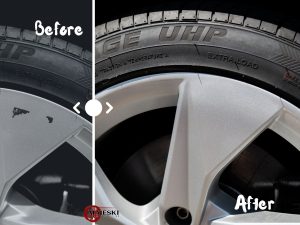
Once the clear coat is breached, the corrosive dust attacks the raw aluminum. This creates “pitting”, small craters eaten into the metal. At this point, the damage is no longer just on the surface; the metal itself is being consumed.
Expert Tips for Effective Brake Dust Removal
| Do This | Avoid That |
| Do use a pH-neutral, “color-changing” iron remover. | Don’t use “acid-based” cleaners; they can etch the finish. |
| Do clean wheels when they are cool to the touch. | Don’t spray cold water on hot wheels (can warp rotors). |
| Do apply a ceramic coating or high-quality sealant. | Don’t use abrasive steel wool or stiff brushes. |
Frequently Asked Questions
Why do German cars (BMW, Audi, Mercedes) seem to have more brake dust?
European manufacturers often use “softer” brake pad compounds to provide superior stopping power and heat dissipation. The trade-off is a higher volume of metallic dust compared to domestic or Asian ceramic pads.
Can I just “buff out” brake dust pitting?
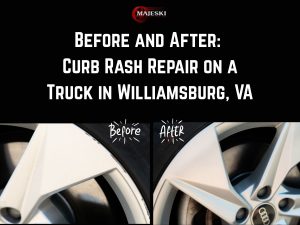
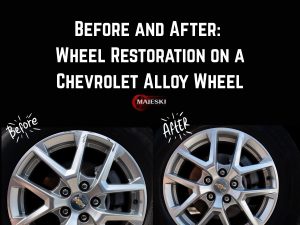
Once the metal is pitted, buffing is rarely enough. The wheel usually requires professional sanding, filling of the craters, and a complete re-application of the rim coloring and clear coat to ensure a smooth, factory-grade finish.
Prevention is Cheaper than Restoration
Brake dust is a silent destroyer of luxury rims. By understanding its chemical nature, vehicle owners in Williamsburg and Richmond can take proactive steps to clean their wheels before the corrosion becomes permanent.
If your wheels have already developed stubborn dark spots or a rough texture that won’t wash away, they may already be in Phase 2 or 3 of the damage timeline.