When a wheel comes back scratched, gouged, or showing curb rash, the first question most Virginia drivers ask is the same: is it cheaper to repair it or replace it? Alloy wheel repair cost is the deciding factor for most people, but the answer is rarely as simple as a single number. Vehicle type, wheel size, finish, and where you get the work done all affect both sides of the equation. This breakdown gives you the real-world numbers and the context to make a confident decision.
What Drives the Cost on Both Sides of the Decision
Before comparing repair to replacement, it helps to understand what actually drives cost in each direction. The variables are not the same, and knowing them prevents you from comparing a complete repair quote against an incomplete replacement estimate.
What Affects Alloy Wheel Repair Cost
Professional alloy wheel repair pricing is based on four primary factors: the type of damage, the severity, the wheel size, and the finish type.
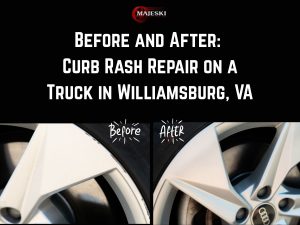
- Damage type. Surface scratches, curb rash, and finish damage are the most common and most repairable. Chemical corrosion and deep structural damage require more extensive work and carry higher costs.
- Severity. Light scuffs that have not broken through the clear coat cost less to address than deep gouges that have reached bare aluminum.
- Wheel size. Larger diameter wheels require more material and more time. A 20-inch wheel on a truck or performance SUV takes longer to prep, finish, and cure than a 17-inch wheel on a standard sedan.
- Finish type. Standard painted silver is the most straightforward to match. Machined, hyper-silver, two-tone, or custom finishes require additional steps and more precise color matching.
For professional mobile alloy wheel repair, most jobs fall in the range of $85 to $200 per wheel. According to Edmunds, cosmetic wheel repair through a dealership service department typically runs higher due to overhead and third-party outsourcing.
What Affects Wheel Replacement Cost
Replacement cost is driven by sourcing channel, wheel specifications, and installation requirements. Most drivers underestimate the full cost because they focus on the wheel price alone.
- OEM replacement. Factory wheels sourced through a dealership or authorized parts supplier are the most expensive option. Prices vary widely by make and model but routinely run several times the cost of professional repair for luxury, performance, and full-size truck applications.
- Aftermarket replacement. Third-party wheels cost less than OEM but introduce finish matching risk. Even wheels marketed as compatible may present a visible color or sheen difference against the undamaged wheels on the same vehicle.
- Installation and balancing. Neither OEM nor aftermarket quotes typically include mounting, balancing, or TPMS sensor transfer, all of which add to the final cost.
- Sourcing time. Depending on the vehicle, matching the correct finish variant can take days or weeks, particularly for older model years or limited-production trim levels.
Side-by-Side Cost Comparison
| Option | Typical Cost Per Wheel | Additional Costs | Finish Match Risk |
|---|---|---|---|
| Professional mobile repair | $85 to $200 | None | None — original wheel retained |
| Dealership repair (outsourced) | Higher due to overhead markup | Shop fees may apply | Low if properly matched |
| OEM replacement | Significantly higher | Installation, balancing, TPMS | Low if same model year sourced |
| Aftermarket replacement | Variable | Installation, balancing, TPMS | Moderate to high |
How Vehicle Type Changes the Calculation
The repair-versus-replacement math is not the same for every vehicle. Wheel size and finish complexity vary significantly across vehicle classes, and those differences shift the numbers on both sides.
Luxury and performance vehicles. Audi, BMW, Mercedes, and similar vehicles use proprietary finishes that are difficult and expensive to source as OEM replacements. A single factory wheel for a German luxury vehicle can run into the hundreds before installation. Professional restoration that color-matches the existing finish is almost always the more practical path.
Full-size trucks and SUVs. Larger diameter wheels mean higher OEM replacement costs and more surface area to match. KBB notes that truck and SUV wheel replacement frequently runs higher than owners anticipate due to the size and finish complexity of factory alloy options in this segment.
Standard passenger vehicles. Repair is still typically more cost-effective than OEM replacement, though the gap narrows on vehicles with simpler, lower-cost factory wheels. Even here, the finish matching risk with aftermarket replacements often tips the decision toward professional repair.
Why Virginia Drivers Are Choosing Mobile Restoration
Across Northern Virginia, the Fredericksburg corridor, and the Richmond metro area, mobile wheel restoration has become the preferred alternative to dealership service for surface-level wheel damage. The reasons are consistent across all three markets.
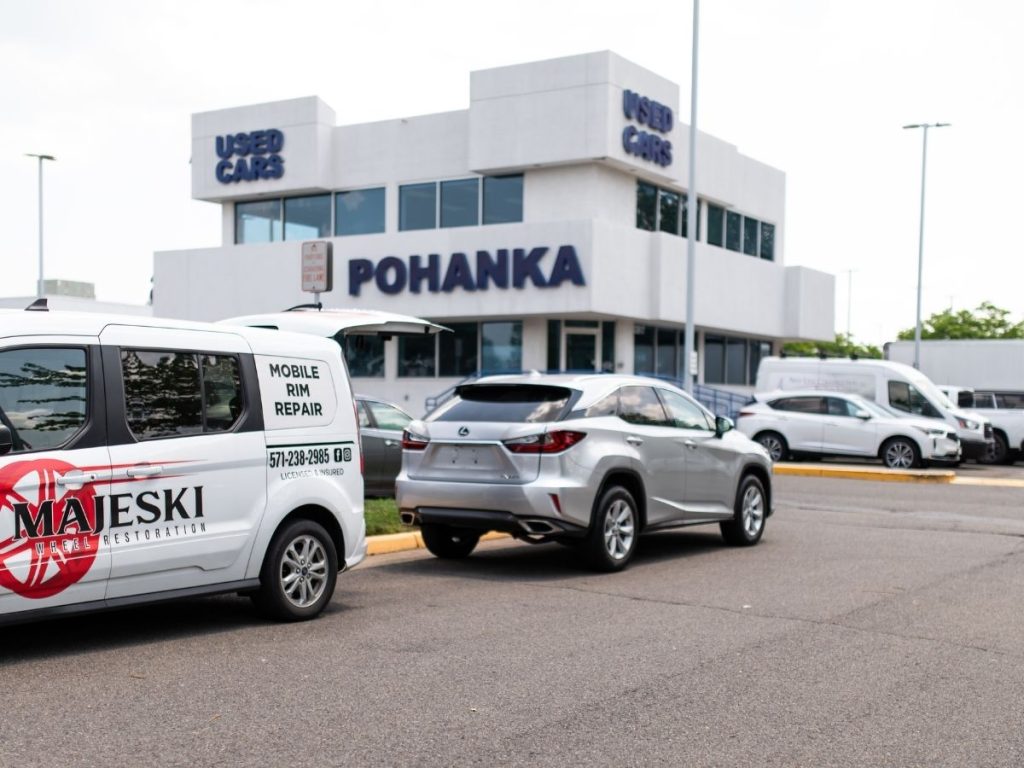
Dealerships outsource cosmetic wheel repairs to third-party vendors and pass the markup to the customer. The vehicle owner pays dealership rates for work that a qualified mobile technician can perform on-site at a fraction of the cost.
Mobile restoration also eliminates the scheduling friction of a service department appointment. Most jobs are completed at the client's home or workplace within a single visit, with no vehicle drop-off and no downtime beyond the cure period.
Majeski Wheel Restoration is licensed and insured, serving clients across Virginia and Maryland with professional-grade mobile repair. Our team background and service standards are available for review before you book.
For a full overview of damage types and the correct repair approach for each, visit our complete wheel restoration guide. To understand the specific services available for your situation, see our rim repair types page and our wheel scratch removal service.
If you are unsure whether we cover your area, our service locations page lists all active coverage areas across Virginia and Maryland.
Frequently Asked Questions About Alloy Wheel Repair Cost
Is alloy wheel repair always cheaper than replacement?
For cosmetic damage, scratches, curb rash, finish wear, and chemical staining, professional repair is almost always less expensive than OEM replacement when you factor in the full cost of sourcing, installation, balancing, and TPMS transfer. The gap is largest on luxury, performance, and full-size truck applications.
What types of alloy wheel damage cannot be repaired?
Structural damage including cracks, bends, and fractures may require replacement depending on severity and location. Surface cosmetic damage is repairable in the vast majority of cases. A professional on-site assessment gives you a clear answer specific to your wheel without any obligation.
Will a repaired alloy wheel look different from the others on my vehicle?
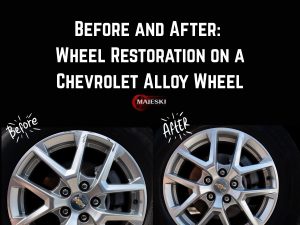
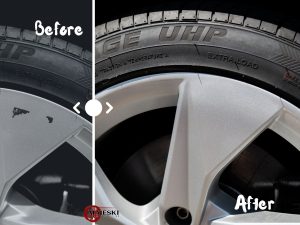
Not with a properly executed color-matched restoration. Professional repair uses finish-specific materials referenced against your vehicle's existing wheels. The goal of every repair is a result that is indistinguishable from the undamaged wheels under normal viewing conditions.
How long does mobile alloy wheel repair take?
Most single-wheel repairs are completed within two to three hours on-site. Multi-wheel jobs scale accordingly. Wheels are ready to drive within 24 hours once the finish has fully cured.
Get an Accurate Quote Before You Decide
The best way to make a confident repair-versus-replacement decision is to get a professional assessment first. Majeski Wheel Restoration provides free on-site quotes across Virginia and Maryland. Send us photos of your wheels and we will give you an honest evaluation of the damage and what it will take to restore them.