One of the most common questions we hear from Alexandria, VA drivers is a simple one: what wheel damage can be repaired, and what actually requires replacement? The honest answer is that most cosmetic wheel damage is repairable — but not all of it, and the difference matters. Getting that assessment wrong in either direction costs money. This guide breaks down exactly what is restorable, what is not, how a technician evaluates damage on-site, and the mistakes drivers most commonly make before calling a professional.
Repairable vs. Non-Repairable Wheel Damage: Where the Line Is
The distinction between repairable and non-repairable wheel damage comes down to one question: is the damage cosmetic or structural? Cosmetic damage affects the finish and surface of the wheel. Structural damage affects the integrity of the wheel itself. A professional technician assesses both before recommending any service.
Damage That Is Repairable
The following damage types are restorable in the vast majority of cases when addressed before they progress to a structural level:
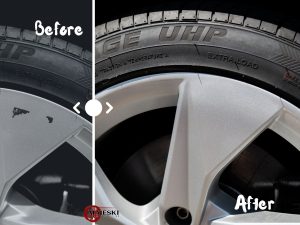
- Surface scratches and scuffs. Marks that have broken through the clear coat but have not significantly penetrated the base paint or reached bare aluminum are among the most straightforward repairs. The damaged area is leveled, color-matched, and clear-coated to a factory-quality result.
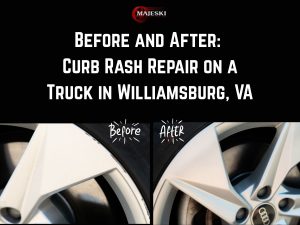
- Curb rash. Gouges and missing finish along the outer lip and spoke faces caused by curb contact are repairable when they have not compromised the structural integrity of the wheel. Depth and location of the damage determine the complexity of the repair.
- Chemical staining and brake dust corrosion. Ferrous brake dust particles bond to aluminum wheel finishes at a microscopic level and cause discoloration, surface etching, and early-stage pitting. Professional decontamination and refinishing address this category of damage before it reaches a non-repairable depth. See our chemical damage restoration service for a full breakdown of what this process involves.
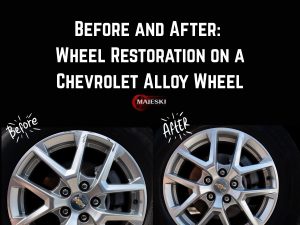
- Color fade and finish peeling. UV exposure, age, and harsh cleaning products break down wheel finishes over time. Faded, oxidized, or peeling finishes can be stripped back and refinished to restore both the appearance and the protective barrier of the wheel.
Damage That Requires Replacement
Not every damaged wheel can or should be restored. The following damage types move the conversation from repair to replacement:
- Structural cracks. A crack in the wheel face, spoke, or barrel is a safety issue, not a cosmetic one. According to NHTSA's vehicle safety guidance at SaferCar.gov, structural wheel failure at speed is a documented cause of loss-of-control incidents. A cracked wheel should be taken out of service immediately regardless of how minor the crack appears.
- Bent or buckled wheels. A wheel that has been bent by pothole impact or road debris may be machined back to true in some cases, but severe bending compromises the metal structure in ways that are not always visible to the eye. An on-site assessment determines whether straightening is appropriate or whether replacement is the safer call.
- Deep corrosion penetrating the base metal. Chemical damage that has been left untreated long enough to pit deeply into the aluminum substrate cannot be restored to a sound, sealed surface through refinishing alone. At that point, the structural integrity of the wheel material itself is in question.
- Fractures at the lug nut area. Damage in the hub area or around the lug nut seats directly affects how the wheel interfaces with the vehicle. This is a replacement situation without exception.
How a Technician Assesses Damage On-Site
A professional on-site assessment is not a visual guess. It follows a structured evaluation that considers multiple factors before any recommendation is made.
Step 1: Clean surface inspection. The wheel is cleaned and decontaminated before assessment. Brake dust, road grime, and surface oxidation can mask the true extent of damage or make minor damage appear worse than it is. A clean surface gives an accurate read.
Step 2: Clear coat and paint depth evaluation. The technician assesses whether the damage has broken through the clear coat, reached the base paint, or penetrated to bare aluminum. Each level requires a different repair approach and carries a different cost implication.
Step 3: Structural check. The wheel is checked for cracks, bends, and any deformation that would affect its safety in service. Tire Rack's technical resources note that aluminum alloy wheels should be inspected for structural damage any time they sustain a significant impact, as cracks can be hairline-thin and not immediately obvious without close examination.
Step 4: Recommendation with full explanation. A qualified technician gives you an honest assessment of what is repairable, what is not, and why. At Majeski Wheel Restoration, we do not recommend repair on wheels that have structural concerns regardless of what the customer prefers. You can review our service standards and background before booking.
The Most Common Mistakes Drivers Make
Two assumptions consistently lead drivers in the wrong direction when evaluating wheel damage.
Assuming damage is worse than it is. Scratches and curb rash look alarming, particularly on a dark or high-gloss finish where contrast makes the damage stand out sharply. Drivers frequently assume their wheel needs replacement when a professional repair would restore it completely at a fraction of the cost.
Assuming damage is less serious than it is. The opposite mistake is more dangerous. A hairline crack around a spoke base or a slight wobble that develops after a pothole impact can be easy to rationalize away. Structural damage that goes unaddressed does not stay static. It progresses under the stress of normal driving until it becomes a safety concern.
For Alexandria drivers navigating the pothole-heavy streets of the I-395 and I-495 corridors, the second mistake is the one worth taking seriously. Northern Virginia roads take a consistent toll on alloy wheels, and impact damage from potholes should always be professionally assessed rather than assumed to be cosmetic.
For a full overview of the restoration process and what each damage type involves from assessment through completion, visit our complete wheel restoration guide. To understand the specific repair types available for your situation, our rim repair types page covers each service category in detail.
Frequently Asked Questions About Repairable Wheel Damage
Can a cracked alloy wheel be repaired?
Structural cracks in alloy wheels are a safety concern and are not recommended for repair in most cases. A cracked wheel should be taken out of service and assessed by a professional immediately. The location and depth of the crack determines whether the wheel can be safely returned to service at all.
How do I know if my wheel damage is cosmetic or structural?
Cosmetic damage affects the finish — scratches, curb rash, staining, and color fade. Structural damage affects the wheel itself — cracks, bends, and fractures. If your vehicle has developed a vibration, pulls to one side, or the wheel shows any visible deformation, treat it as a structural concern until a professional confirms otherwise.
Is it safe to drive on a wheel with curb rash?
In most cases, yes. Surface curb rash that has not compromised the structural integrity of the wheel does not affect driving safety. However, deep gouges that reach the base aluminum should be assessed to confirm no cracking has occurred at the point of impact, particularly on the outer lip where the wheel is thinnest.
How long can I wait before repairing cosmetic wheel damage?
The sooner the better. Cosmetic damage that breaks through the clear coat exposes bare aluminum to moisture, brake dust, and road salt. In the Northern Virginia and Alexandria area, where road salt is used heavily through winter, exposed aluminum can begin showing oxidation within a single season. Early repair is simpler and less expensive than addressing damage that has been allowed to progress.
Get an Honest Assessment in Alexandria, VA
If you are not sure whether your wheel damage is repairable, the right move is a professional assessment before making any decision. Majeski Wheel Restoration provides mobile on-site evaluations across Alexandria, Arlington, Fairfax County, and Northern Virginia. We give you a straight answer on what is repairable, what is not, and what the repair will involve.